School Spotlight:
Xingnan Primary pupils partner industry experts to design learning space
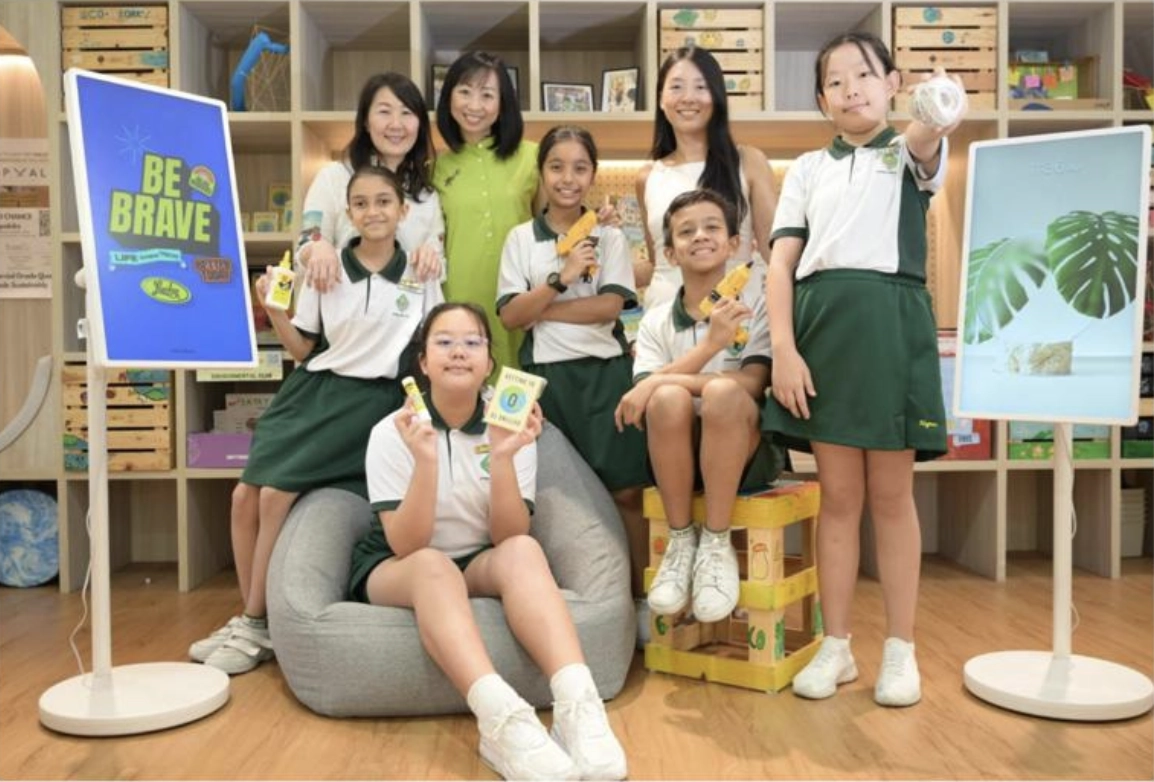
What began as a simple idea to refresh a classroom at Xingnan Primary School has grown into a hands-on learning journey that empowered pupils to think, design and create like professionals. Through a collaboration with industry experts, a group of students worked from concept to completion to redesign a classroom that better supports learning, creativity and collaboration.
The project saw pupils partner Spatial Anatomy, a design firm specialising in educational spaces, as part of the school’s applied learning programme. Rather than receiving a ready-made solution, students were actively involved in every stage of the process, learning how thoughtful design can influence behaviour, comfort and engagement in a learning environment.
Guided by professional designers, the pupils began by observing how existing classrooms were used. They interviewed classmates and teachers to understand pain points, such as limited flexibility, lack of collaborative areas and the difficulty of accommodating different learning styles. These insights helped shape their design goals, which included adaptability, inclusivity and student ownership of the space.
Armed with sketches and mood boards, the pupils explored how furniture layout, lighting and materials could transform the classroom experience. They learned to use digital tools such as SketchUp to visualise their ideas, while also building physical models to test scale and movement. Along the way, students were encouraged to present their concepts, explain their design choices and refine their ideas based on feedback.
The redesigned classroom now features movable furniture that allows the space to shift easily between group discussions, independent work and presentations. Tables with wheels can be rearranged or joined together, while soft seating and flexible zones support both collaboration and quiet reflection. The layout gives students greater autonomy to decide how and where they learn best.
Sustainability was also a key consideration. Pupils proposed using recycled and eco-friendly materials, including furniture made from recycled plastics, and explored ways to incorporate greenery into the space. Some suggested indoor hydroponic plants to improve air quality while doubling as a learning tool. These ideas reflected a growing awareness of environmental responsibility and long-term impact.
Beyond aesthetics, the project challenged students to navigate teamwork and decision-making. Differences in opinion were common, but pupils learned to compromise, justify their ideas and respect alternative viewpoints. Teachers and coaches noted that these moments were among the most valuable learning experiences, helping students develop communication skills and resilience.
For many pupils, the project reshaped how they viewed classrooms. Instead of seeing them as fixed environments, they began to understand spaces as tools that can be adapted to support different activities and needs. Students expressed pride in seeing their ideas brought to life, describing the experience as both exciting and empowering.
Educators involved in the initiative said the project demonstrated the power of design thinking in education. By placing students at the centre of the process, the programme fostered creativity, critical thinking and a sense of responsibility. It also showed that meaningful learning can happen beyond textbooks, through real-world problem-solving and collaboration with professionals.
Vice-principal Madam Ang said the experience gave pupils exposure to skills often introduced much later in education, such as spatial planning, digital prototyping and user-centred design. More importantly, it helped students develop confidence in expressing ideas and engaging in constructive dialogue.
Designers from Spatial Anatomy shared that working with the pupils reinforced the idea that good design is not limited by age. They noted that children often approach problems with openness and creativity, and that listening to users—in this case, students themselves—is essential to creating effective spaces.
The completed classroom stands as a tangible result of the project, but educators say the true success lies in the learning journey. By turning a real classroom challenge into an opportunity for creativity and collaboration, the initiative has shown how students, when trusted and guided, can meaningfully shape their own learning environments.